

Signs You Need a New Roof (Charlotte, NC)
Most roofs do not fail overnight. They give you warning signs for months, sometimes years, before they actually need replacing. The hard part for most Charlotte homeowners is telling the difference between a roof that looks a little tired and a roof that is genuinely at the end of its life. One needs a quick repair. The other needs a full replacement. Mixing those two up costs you money either way.
This guide walks through the signs that actually matter, what each one usually means, and how urgent it is. Some of these you can spot from the ground with a pair of binoculars. Others only show up in the attic or after a storm. By the end you will have a clear sense of whether to keep an eye on things, book a repair, or start planning for a new roof.
Not sure what you are looking at? Call Keyway Construction & Roofing at 704-847-7119 for a free, no-pressure roof inspection across the Charlotte metro.
Why Charlotte roofs age the way they do
Before the signs, it helps to understand what your roof is up against here. The Charlotte area sits in a humid subtropical climate, and that combination of heat and moisture is hard on roofing materials. Long, hot summers bake asphalt shingles and dry out their protective oils. Afternoon thunderstorms roll through with heavy rain, gusty wind, and the occasional round of hail. Then winter brings freeze and thaw cycles that work moisture into small cracks and widen them.
Two local factors speed things up even more. First, the tree canopy. Older neighborhoods in Matthews, Waxhaw, and Mint Hill have mature hardwoods that shed limbs in storms and drop debris that traps moisture against the roof. Second, the building boom. A large share of homes across Union County and south Charlotte went up during the 1990s and 2000s. Many of those roofs are now hitting the 20 to 25 year mark at the same time, which is exactly when asphalt shingles tend to wear out. If your neighborhood was built in one wave, the roofs are aging in one wave too.
None of this means your roof is failing. It just means the signs below show up here a little sooner than they might in a milder climate, so they are worth checking for.
The quick self-check
Here is a short list you can run through before you read the detail on each one. If you can tick more than two or three of these, it is worth having the roof looked at properly.
Warning signs to look for:
✓ Your roof is 20 years old or more
✓ Shingles are curling, cupping, cracking, or missing
✓ You see shingle granules building up in the gutters
✓ Daylight or water stains show up in the attic
✓ There are brown stains on ceilings or upstairs walls
✓ The roofline looks like it is dipping or sagging
✓ Dark streaks, moss, or algae are spreading across the surface
✓ Metal flashing around the chimney or vents is rusted or loose
Sign 1: Your roof has reached its age
Age is the single best predictor of roof failure. A roof can look fine from the street and still be worn out underneath, because the materials degrade whether or not the damage is obvious yet.
The exact lifespan depends on what is on your roof. These are general industry ranges, and our climate tends to push them toward the shorter end rather than the longer end.
| Roofing material | Typical lifespan |
|---|---|
| 3-tab asphalt shingles | About 15 to 20 years |
| Architectural (dimensional) shingles | About 25 to 30 years |
| Metal roofing | About 40 to 70 years |
| Tile | 50 years or more |
If you do not know how old your roof is, check your closing documents from when you bought the home, or look for a permit record. Another clue is whether the current roof was installed over an older layer of shingles. A roof installed over an existing layer usually wears out faster, because the trapped heat ages both layers at once.
A roof at or past its expected age does not always need replacing the day it hits that number. But once it is in that window, every storm and every season is borrowed time, and it is smart to have it inspected so you are planning ahead instead of reacting to a leak.
Sign 2: Shingles are curling, cupping, cracking, or missing
Your shingles are the first line of defense, so they show wear first. There are a few different patterns, and each one tells you something slightly different.
Curling and cupping happen when shingle edges lift or the centers rise up. This often points to age, but it can also signal poor attic ventilation cooking the underside of the roof. Curled shingles let wind and water get underneath, which is how small problems turn into leaks.
Cracking usually comes from the shingle drying out and becoming brittle, again a sign of age or heat exposure. Cracked shingles break apart in wind and expose the layers beneath.
Missing shingles are the clearest signal of all. Sometimes you find one in the yard after a storm. Sometimes you notice a patch on the roof that does not match the rest. A single missing shingle might be a simple repair. Several missing across different areas, especially on an older roof, leans toward replacement.
One missing shingle is not an emergency. Widespread curling and cracking across the whole roof usually is the point where repair stops making sense.
Seeing damage but not sure how far it goes? A free Keyway inspection will tell you. Call 704-847-7119.
Sign 3: Granules are collecting in your gutters
Asphalt shingles are coated with small mineral granules. Those granules protect the shingle from the sun and give it its color. As a roof ages, it sheds them, and they wash down into the gutters and out the downspouts.
A little granule loss is normal, especially on a newer roof that is settling in. What you are watching for is a heavy buildup of grit in the gutters or piling up at the bottom of the downspouts. Bald spots on the shingles where the darker asphalt shows through are the same story from the other direction. Once a shingle loses its granule coat, the sun starts breaking down the asphalt directly, and the shingle has very little life left.
Granule loss is also worth noting after a hailstorm. Hail knocks granules loose, and a sudden pile of grit in the gutters after a storm can be a sign of damage that may be worth an insurance conversation. If you clean your own gutters, pay attention to what comes out. If someone cleans them for you, ask them to flag it if they see a lot of granules.
Sign 4: Daylight or water stains in the attic
The attic tells you things the outside of the roof cannot. Pick a bright day, go up with a flashlight, and look at the underside of the roof deck.
If you see beams of daylight coming through the roof boards, that is a clear problem. Light is getting in, which means water can too. A little soft glow around vents and gables can be normal, but distinct shafts of light through the decking are not.
Next, look for dark stains, streaks, or damp spots on the wood and on the insulation. Discolored or spongy decking means water has been getting in and soaking into the structure. That moisture leads to rot and mold, and wet insulation loses much of its ability to keep your home comfortable. Rotted or discolored decking is one of the stronger signs that you are looking at a new roof rather than a patch, because the damage has moved past the surface and into the bones of the roof.
Sign 5: Brown stains on ceilings or upstairs walls
This is the sign most homeowners actually notice first, usually because it shows up inside the living space where you cannot miss it. A yellow-brown ring on the ceiling or a streak running down an upstairs wall means water has already made it through the roof.
One thing that surprises people: the stain is often not directly under the leak. Water travels along the decking and the framing before it finds a low spot to drip from, so the entry point can be several feet away. That is why chasing the stain alone rarely fixes the problem.
An isolated leak near a chimney or a vent can often be repaired without touching the rest of the roof. But leaks that keep coming back, or that show up in more than one place, usually mean the roof’s water-shedding system is breaking down as a whole. At that point you are repairing symptoms while the underlying roof keeps failing. This is one of the clearest moments to weigh roof repair versus replacement honestly rather than keep patching.
Sign 6: The roofline is sagging
Stand across the street and look at the ridges and the flat planes of your roof. They should run in clean, straight lines. If you see a dip, a wave, or a section that looks like it is sinking, treat that seriously. Sagging is one of the most concerning signs on this list.
A sagging roofline usually means the decking or the structure underneath has been weakened, almost always by water that has been sitting in the roof system for a long time. Saturated wood loses its strength and starts to give way under the weight of the roof above it. This is not a cosmetic issue and it is not one to wait on. A sagging roof should be inspected by a professional promptly, because in the worst cases the structure can fail.
If your roof is visibly sagging, do not climb on it, and do not wait for the next storm. Get it looked at.
Sign 7: Dark streaks, moss, or algae
Those black streaks running down many roofs in the Charlotte area are usually algae. On its own, algae is mostly a cosmetic issue, though it can be cleaned and it does signal that the roof stays damp.
Moss is more of a concern. It grows in the shaded, north-facing sections that stay wet, and it holds moisture against the shingles instead of letting it drain. Over time that trapped water works its way under the shingles and speeds up decay. Moss is common on roofs shaded by the mature trees in older Matthews and Waxhaw neighborhoods.
Resist the urge to scrape moss off yourself. Aggressive scrubbing or pressure washing strips granules and damages the shingles, which causes more harm than the moss did. If moss has taken hold, it is better to have the roof assessed so the underlying dampness gets addressed, not just the surface.
Sign 8: Flashing that is cracked, rusted, or pulling away
Flashing is the metal that seals the joints on your roof, around the chimney, the vents, the skylights, and the valleys where two roof planes meet. These transition points are where most leaks actually start, not in the open field of shingles.
Over the years flashing can rust, crack, lift, or pull loose as the caulk behind it dries out. When that seal fails, water runs straight into the joint it was supposed to protect. Damaged flashing on its own is often a repair rather than a full replacement, which is good news. The catch is that flashing problems and shingle problems tend to arrive together on an aging roof, so it is worth checking the whole system rather than assuming one fixed joint solves everything. If you want to understand how these pieces fit together, our breakdown of the parts of a roof covers each component.
Sign 9: Your neighbors are getting new roofs
This one sounds odd, but it holds up in Charlotte’s tract neighborhoods. When a whole subdivision goes up in the same year with the same builder and the same shingles, those roofs tend to wear out around the same time. If you start seeing dumpsters and roofing crews up and down your street, your roof may be on a similar clock.
There is a storm version of this too. If a round of hail or high wind moved through and your neighbors are suddenly replacing roofs, your roof likely took the same hit even if you cannot see obvious damage from the ground. That is a good moment to have it inspected and to check whether you have a valid insurance claim before the filing window closes.
When a sign means repair, not replacement
Here is the part a lot of roofing content skips, because it is easier to tell every homeowner they need a new roof. The truth is that many of these signs, caught early and showing up on their own, point to a repair rather than a full replacement.
A few examples of what usually stays in repair territory:
- A single missing or damaged shingle after a storm
- One isolated leak traced to a specific flashing or vent
- Localized damage on an otherwise sound, mid-life roof
- A small section of lifted shingles in one area
And what usually points toward replacement:
- Widespread curling, cracking, or granule loss across the whole roof
- Recurring leaks in multiple locations
- Rotted or sagging decking
- A roof already past its expected lifespan with several signs stacking up
The honest answer is that no homeowner should have to make this call from the ground. It takes someone on the roof and in the attic to tell whether the damage is surface-level or structural. Keyway Construction has been making that call for Charlotte-area families since 1975, and the company’s approach is simple: if a repair will solve the problem, that is what gets recommended. A new roof only comes up when the roof genuinely needs one. If you want to think through the decision before you call, our guide to roof repair versus replacement lays out the trade-offs, and you can read more about roof repair on its own page.
What a Keyway roof inspection looks like
If two or more of these signs sound familiar, the next step is an inspection. Here is what that involves so there are no surprises.
|
1
|
Exterior assessment. A close look at the shingles, flashing, valleys, gutters, and ridgeline for the wear patterns covered above. |
|
2
|
Attic and decking check. Looking from underneath for daylight, water stains, soft decking, and ventilation issues that you cannot see from outside. |
|
3
|
Honest findings. A clear explanation of what was found, whether it calls for a repair or a replacement, and why. No pressure and no scare tactics. |
|
4
|
Free written estimate. If work is needed, you get a clear estimate with no hidden fees, usually with next-day scheduling for the assessment. |
Most roofing professionals, including industry groups like the National Roofing Contractors Association, recommend having your roof inspected about twice a year, and again after any major storm. Catching a problem while it is still a repair is always cheaper and less disruptive than discovering it after water has reached your ceilings.
Spotting the signs is the first step. Knowing what they mean is the next. Call Keyway Construction & Roofing at 704-847-7119 for a free roof inspection across Charlotte, Matthews, Mint Hill, Indian Trail, Waxhaw, Monroe, and the surrounding communities.
Frequently asked questions
How do I know if I need a roof repair or a full replacement?
It comes down to how widespread the damage is and how old the roof is. Isolated issues like a single missing shingle or one leak near a vent are usually repairs. Widespread shingle wear, recurring leaks in different spots, sagging, or rotted decking on an older roof point toward replacement. The only reliable way to know is an inspection that includes both the roof surface and the attic. Keyway gives an honest recommendation and only suggests replacement when the roof genuinely needs it.
How long does a roof last in the Charlotte area?
It depends on the material. 3-tab asphalt shingles typically last around 15 to 20 years, architectural shingles around 25 to 30 years, and metal roofing can last 40 years or more. Charlotte’s heat, humidity, and summer storms tend to push asphalt roofs toward the shorter end of those ranges. If your roof is 20 years or older, it is worth having it checked even if it still looks fine from the ground.
Is a sagging roof an emergency?
A sagging or dipping roofline should be inspected promptly. It usually means water has weakened the decking or the structure underneath, and in serious cases the structure can fail. Do not climb on a sagging roof, and do not wait for the next storm. Call a professional to assess it as soon as you can.
Do I need a new roof after a hailstorm?
Not always. Hail can knock granules loose and bruise or crack shingles, but the damage is not always visible from the ground. After a significant hail or wind event, especially if neighbors are filing claims, it is worth having the roof inspected. If there is damage, you may have a valid insurance claim, and inspections are best done before the filing window closes.
How much does a roof inspection cost with Keyway?
Keyway Construction & Roofing provides free roof inspections and estimates across the Charlotte metro. You get a clear assessment of the roof’s condition and an honest recommendation with no hidden fees and no pressure. Call 704-847-7119 to schedule one.
Keyway Construction & Roofing has served Charlotte, Matthews, and the surrounding Union County communities since 1975. As a family-owned, licensed contractor, the team handles everything from a single repair to a full roof replacement, backed by a workmanship warranty and free next-day estimates. If any of the signs above sound familiar, call 704-847-7119 and get a straight answer about where your roof stands.
Related Roofing Resources
Services: roof replacement, roof repair in Charlotte, and storm damage roof repair.
More guides: roof repair vs replacement, what a new roof costs in Charlotte, and how long a Charlotte roof lasts.
Recent Posts

Protect Your Gutters With Gutter Caps
Eliminate tedious maintenance tasks and unsightly clogs with time-saving gutter guards.See For Yourself
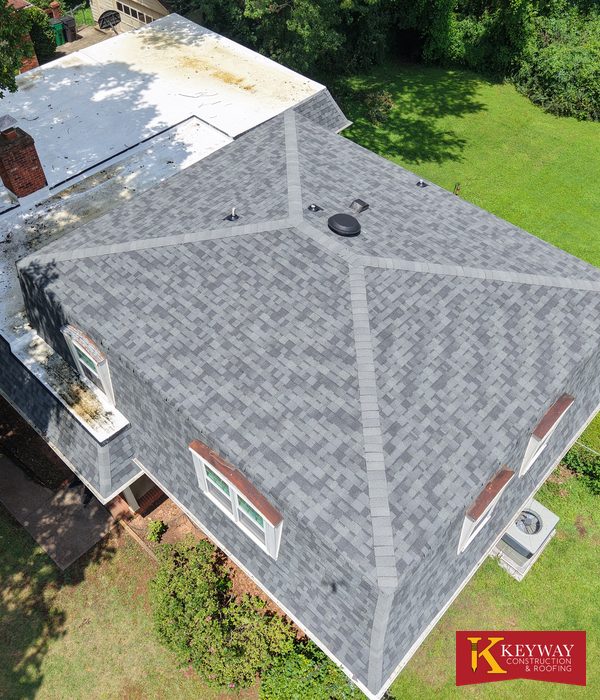
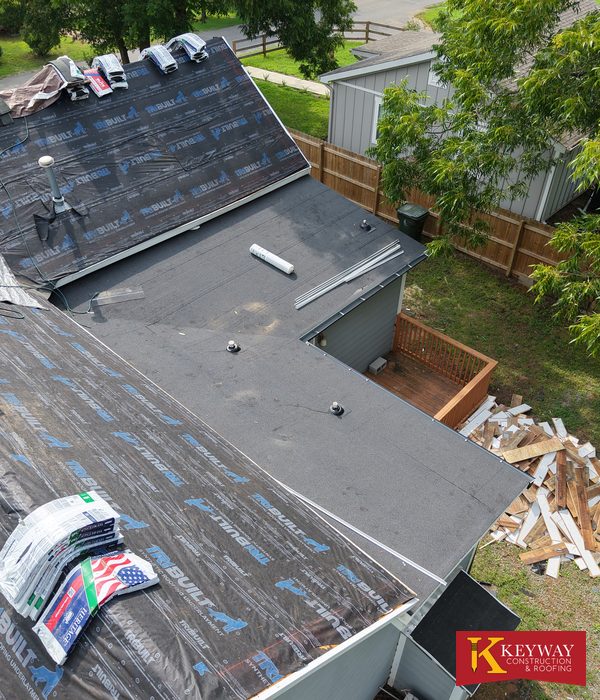
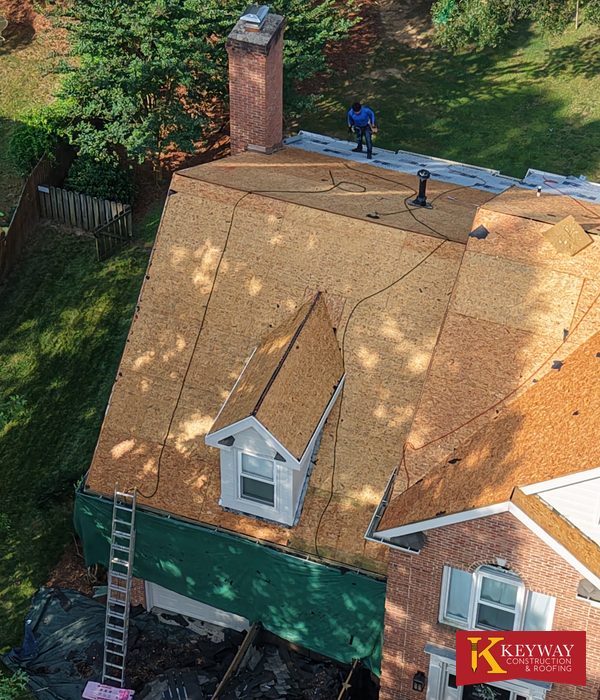
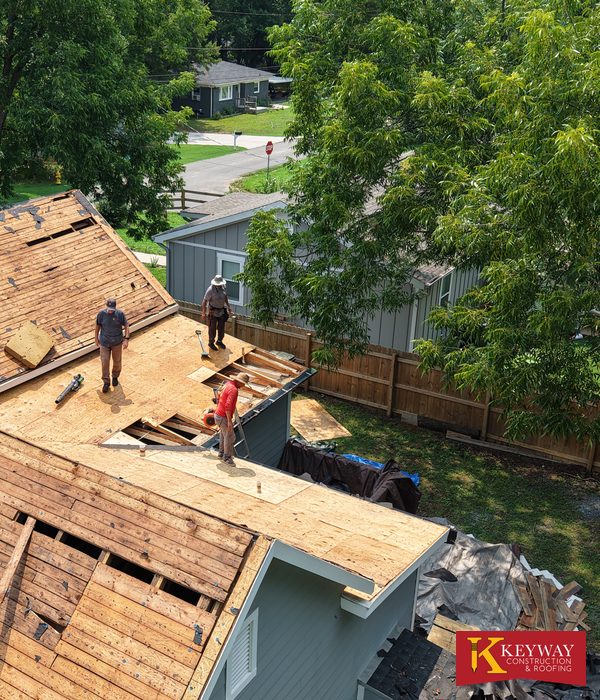
View Our Gallery of Projects
Proudly Serving
Matthews | Stallings | Mint Hill | Indian Trail | Weddington
Waxhaw | Monroe | Ballantyne | South Park | Arboretum |
Myers Park | Pineville | Fort Mill
Matthews | Stallings | Mint Hill | Indian Trail | Weddington
Waxhaw | Monroe | Ballantyne | South Park | Arboretum |
Myers Park | Pineville | Fort Mill