

Roof Repair vs Replacement in Charlotte: How to Decide
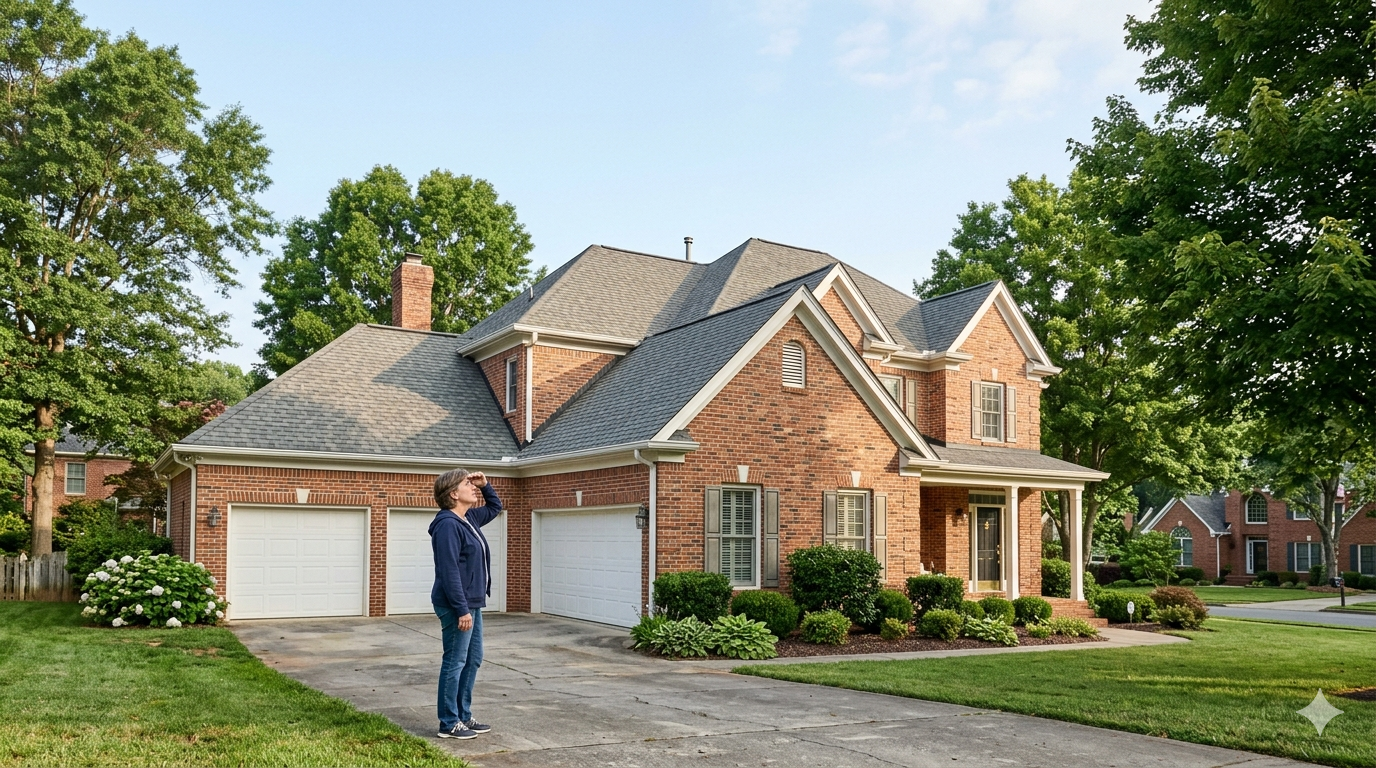
It is the question almost every homeowner reaches eventually, usually standing in the driveway looking up: do I need a whole new roof, or can this one be repaired? It is a fair question, and the honest answer is that it depends, but not in the vague way contractors often use that phrase to avoid committing. It depends on specific, knowable things: how old the roof is, how widespread the damage is, and whether the problem is a few failed components or a system reaching the end of its life. Here is how to think it through for a Charlotte home, and how a contractor who is being straight with you actually makes the call.
How Long a Roof Actually Lasts in the Charlotte Area
Material is the baseline. Everything else, climate, installation quality, ventilation, maintenance, pushes the real number up or down from there. These are realistic service-life ranges for the Charlotte metro, which run a little shorter than the national marketing numbers because of what our climate does to a roof.
|
Asphalt shingles |
Metal roofing |
|
Slate and tile |
Flat and commercial membranes |
If your asphalt roof is past the 20-year mark, you are in the window where replacement becomes a live question even without obvious damage. If it is under 10 and giving you trouble, the problem is almost always a repair, not a roof at the end of its life.
Why Charlotte’s Climate Shortens Roof Life
A roof in Charlotte ages faster than the same roof would in a milder market, and understanding why helps you read your own roof’s situation. Our summers are hot, and attic temperatures can climb to 140 degrees or higher, which bakes shingles from underneath and accelerates the aging, curling, and cracking you see from the street. Year-round UV exposure dries out shingle coatings and hardens the rubber seals around vent penetrations until they crack, one of the most common single sources of leaks we find.
Then there is moisture. Charlotte’s humidity and steady rainfall work into every gap, and shaded sections under the region’s mature tree canopy grow the dark algae streaking that many homeowners mistake for dirt. And the Piedmont sends real storms through, the spring and summer hail and wind that crack, lift, and bruise shingles, sometimes leaving damage that does not show up as a leak for a year or more. All of this together is why a thirty-year shingle rarely lives thirty years here without careful installation and upkeep.
When a Repair Is the Right Call
A repair is usually the answer when the roof has real life left in it and the problem is contained. If your roof is comfortably within its service life and the damage is limited, a few shingles lost in a windstorm, a single cracked pipe boot, a section of flashing that has pulled away from a chimney, fixing the specific failure is the smart, economical move. The rest of the roof is still doing its job, and good targeted work extends its life significantly.
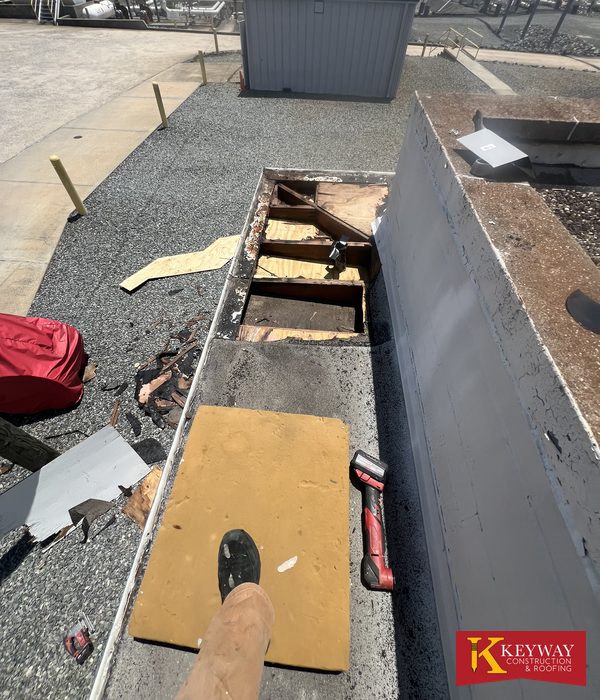
The trap to avoid is repairing the symptom instead of the source. A ceiling stain is not where the leak is; water travels along rafters and decking before it drips, so the entry point is often several feet away. A repair that addresses the stain rather than the actual source will fail at the next heavy rain. This is why finding the true source matters more than patching the visible spot, and it is worth reading more about how roof repair should be done to last.
When Replacement Makes More Sense
Replacement moves to the front when the issues are no longer isolated. The clearest signal is age combined with spreading problems: a roof past 20 years that is showing trouble in multiple places is usually telling you it is done, and pouring repair money into it just delays the inevitable while the bills add up.
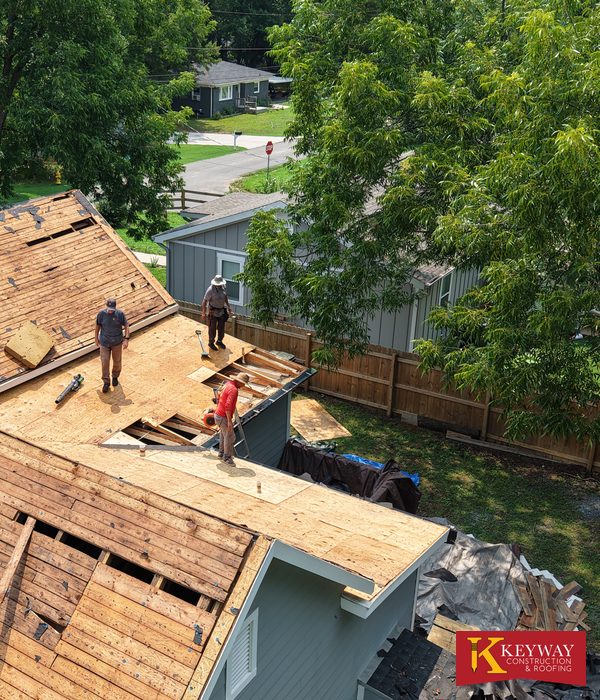
The other signals are about extent. Multiple leak points across the attic or upper floors, shingle curling and cracking across large sections rather than one patch, widespread granule loss that leaves shingles looking bald, and sagging anywhere in the roofline all point toward replacement rather than repair. When moisture has worked into the decking and underlayment beneath the surface, no amount of surface repair solves it. At that point a full roof replacement is the responsible call, and trying to nurse the old roof along usually costs more in the end.
The Signs Worth Watching For
You can read a lot from the ground, and these are the indicators that it is time to get a professional opinion before the next storm.
| Granules in the downspouts. A buildup of grit where your downspouts discharge means the shingles are shedding their protective surface. |
| Curling, cupping, or cracking shingles. Especially across large areas rather than one spot. |
| Dark streaking. Usually algae, common on shaded sections under tree cover. |
| Separated or cracked flashing. At chimneys, skylights, and dormers, often visible from the yard. |
| Interior ceiling stains. Any stain that appears or grows after rain means water is already getting in. |
| Any recent hail or strong wind. Worth an inspection even if the roof looks fine, since storm damage frequently leaves no sign from the ground. |
One safety note: if you see any of these, do not climb up to check it yourself. Walking on a roof is dangerous and can cause more damage. Look from the ground, and call a professional for the rest.
The Overlooked Factor: Ventilation
Here is something most homeowners never hear until a roof fails early: ventilation often decides whether your roof reaches its full lifespan. When an attic cannot breathe, that 140-degree summer heat has nowhere to go, and it cooks the shingles from below, aging them years ahead of schedule. Sometimes the shingles themselves are fine and poor ventilation is quietly destroying them. Balanced intake and exhaust, typically through soffit vents and ridge vents, keeps the attic closer to the outside temperature, which protects the roof and makes the whole house more comfortable. A good contractor assesses ventilation as part of any roofing decision, because fixing it can be the difference between your next roof lasting its full life or failing early.
How a Professional Inspection Settles It
You can narrow the question from the ground, but the actual repair-or-replace decision comes down to what an inspection finds: the true extent of the damage, the condition of the decking and underlayment beneath the surface, the state of the flashings and penetrations, and how much real service life the roof has left. A dedicated roof inspection goes deeper than a glance from a ladder and gives you the information to make the call with confidence rather than guessing.
This is also where an honest contractor earns trust. The right answer is sometimes a repair, sometimes a replacement, and sometimes simply continued monitoring, and you deserve to hear which one your roof actually needs, not which one is most profitable to sell. At Keyway Construction & Roofing, we have been making that call for Charlotte homeowners since 1975, and we do not recommend a replacement when a repair will solve the problem. If a storm is part of your roof’s story, our storm damage process documents everything for insurance, and if an inspection turns up rotted wood, our license lets us handle wood rot repair in the same scope.
Frequently Asked Questions
How often should I have my roof inspected in Charlotte?
A good rule is every two to three years once the roof passes the 10-year mark, and always after any storm that brought noticeable hail or strong wind. Catching a small issue early is far cheaper than discovering it after water has reached your decking and insulation.
Can I just repair part of my roof instead of replacing the whole thing?
Often, yes, if the roof has real life left and the damage is contained to specific areas. Partial or targeted repair is the right move when the rest of the roof is sound. It stops making sense when the roof is near the end of its lifespan or the problems are spread across multiple sections, where repairs become a losing battle.
Will my insurance cover a roof replacement?
If the damage was caused by a covered event such as hail or wind, it may be covered, but coverage depends on your policy and the documentation. This is exactly why a prompt, well-documented inspection after a storm matters. We are not insurance advisors, but we build the photo documentation that supports a complete claim and can be present when the adjuster inspects.
Not sure where your Charlotte roof stands? Keyway Construction & Roofing offers free next-day inspections with an honest assessment, repair or replace, no pressure either way. Call 704-847-7119 or contact us online.
Related Roofing Resources
Services: roof repair in Charlotte, roof replacement, and storm damage roof repair.
More guides: signs you need a new roof, what a new roof costs in Charlotte, and how long a Charlotte roof lasts.
If replacement is the smarter call, read up on the cost factors behind a new roof in Charlotte before you compare estimates.
Recent Posts

Protect Your Gutters With Gutter Caps
Eliminate tedious maintenance tasks and unsightly clogs with time-saving gutter guards.See For Yourself
View Our Gallery of Projects
Proudly Serving
Matthews | Stallings | Mint Hill | Indian Trail | Weddington
Waxhaw | Monroe | Ballantyne | South Park | Arboretum |
Myers Park | Pineville | Fort Mill
Matthews | Stallings | Mint Hill | Indian Trail | Weddington
Waxhaw | Monroe | Ballantyne | South Park | Arboretum |
Myers Park | Pineville | Fort Mill