
Attic Ventilation: Why It Decides How Long Your Roof Lasts
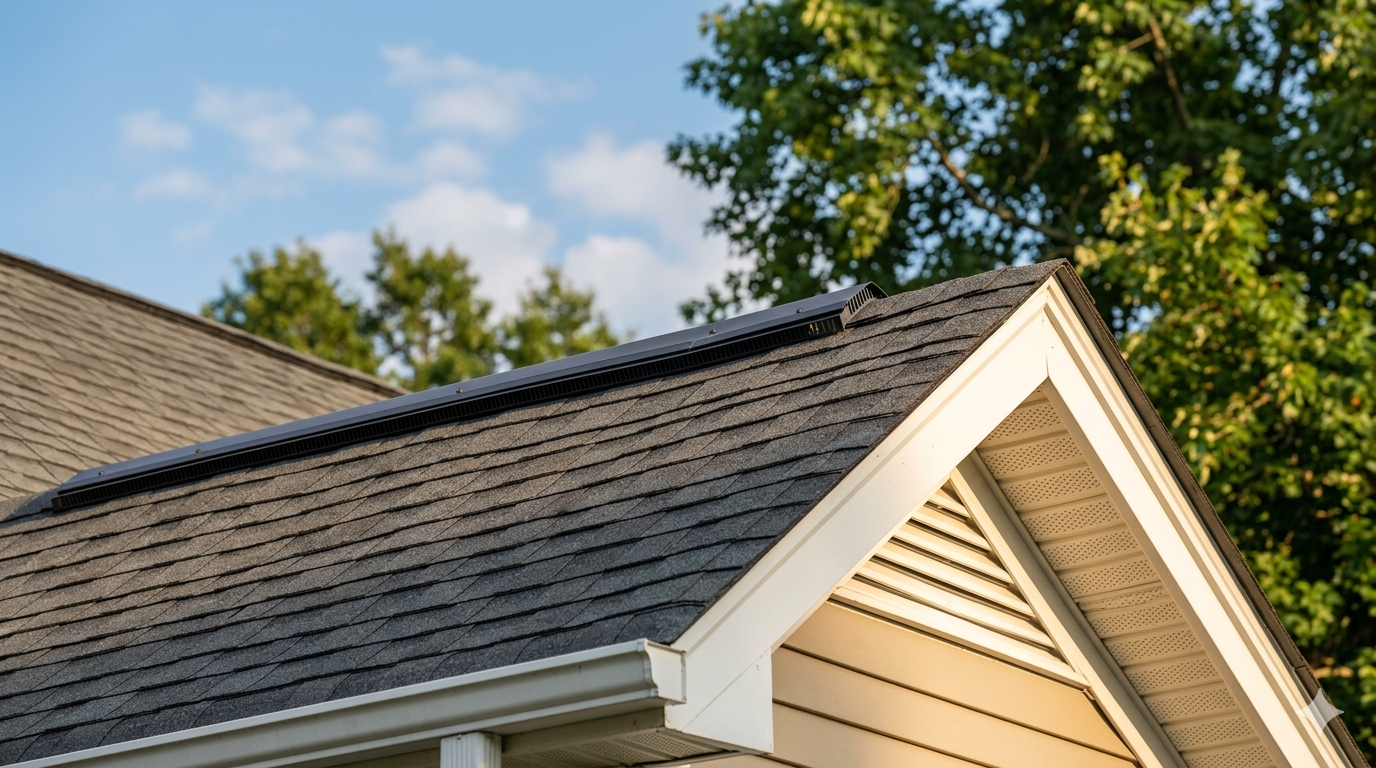
Keyway installs and corrects attic ventilation.
Here is something most Charlotte homeowners never hear until a roof fails years too early: the thing that often decides how long your roof lasts is not the shingle brand or even the installer. It is whether your attic can breathe. In a Charlotte summer, the air trapped in a poorly ventilated attic can reach 140 degrees or more, and that heat cooks your shingles from underneath, aging them well ahead of schedule. Attic ventilation is the quiet factor behind early roof failure, high energy bills, and attic moisture problems, and it is worth understanding before you spend money on a roof that poor airflow will quietly shorten.
What Attic Ventilation Actually Does
A properly ventilated attic does two jobs at once, and both matter in Charlotte. The first is managing heat. Without a way for hot air to escape, summer attic temperatures climb far above the outside air, and that trapped heat radiates down through your ceilings, makes your upstairs rooms uncomfortable, drives up your cooling costs, and bakes the underside of your shingles. The second job is managing moisture. Everyday living, cooking, showering, and breathing, sends water vapor up into the attic, and without airflow to carry it out, that moisture condenses on the underside of the roof deck, where over time it leads to mold, mildew, rusted fasteners, and rotted decking.
Good ventilation keeps the attic closer to the outside temperature and keeps air moving so moisture never gets the chance to settle. Get it right and your roof reaches its full lifespan, your house is more comfortable, and your energy bills are lower. Get it wrong and you pay for it three ways at once.
Why Charlotte’s Climate Makes Ventilation Critical
Ventilation matters more here than it does in milder markets, because our climate works the roof from both directions. The long, hot summers are the obvious half: months of intense heat and UV, with attic temperatures that can sit above 140 degrees through the afternoon, steadily aging shingles from the inside. A roof that is ventilated well runs cooler and lasts closer to its rated life. A roof over a sealed-up attic gives up years it should have had.
The humidity is the half people forget. Charlotte’s moisture works into the attic through everyday living, and in the cooler months it condenses against the cold roof deck and collects as dampness, the slow source of mold and decking rot that homeowners usually do not discover until it has done real damage. So ventilation is not just a summer concern. It protects the roof structure year round, which is exactly why it deserves attention before it becomes a problem you can see.
The Signs Your Attic Is Not Venting Properly
You can catch a ventilation problem before it costs you a roof if you know what to look for. These are the signals worth paying attention to.
| Upstairs rooms that stay hot no matter what the thermostat says, while the rest of the house feels fine. |
| Cooling bills that keep climbing, especially through July and August, as the HVAC fights heat radiating down from the attic. |
| An attic that feels like an oven and air that smells damp or musty when you open it up. |
| Moisture signs in the attic: damp insulation, dark staining on the underside of the decking, mildew, or rusted nail tips. |
| Shingles aging faster than they should, curling or cracking years before their rated life is up. |
Any one of these is worth a closer look. Together, they usually point to an attic that cannot move air the way it needs to, and the fix is almost always cheaper than the roof and structural damage that poor ventilation causes if it is left alone.
How Attic Ventilation Works: Intake and Exhaust
A working ventilation system is not just a few vents stuck wherever there was room. It is a balanced loop: cool air comes in low and hot air goes out high, and the two have to be matched for air to actually move. Cut one side short and the whole system stalls.
|
Intake (low) Soffit vents along the eaves are the most common intake. They let cool outside air enter at the bottom of the attic. Intake is the half people most often neglect, and without enough of it, exhaust vents have nothing to pull and the system does not work. |
Exhaust (high) Ridge vents running along the peak are the most effective exhaust, letting the hottest air escape at the very top. Gable vents, roof louvers, and powered or solar fans are other options. The goal is a clear path for hot air to leave as cool air comes in below. |
A common building guideline is roughly one square foot of net free ventilating area for every 300 square feet of attic floor when intake and exhaust are balanced, though the right setup depends on your specific home, its roof design, and its insulation. The principle that matters is balance. An attic with plenty of ridge venting but blocked or insufficient soffit intake performs poorly, and adding more exhaust without matching intake can even pull conditioned air up out of the house. This is why ventilation is worth assessing as a system rather than guessing at it, and it is part of what we evaluate during any roof inspection.
Ventilation and Your Roof Warranty
There is a detail that catches homeowners by surprise: shingle manufacturers require adequate attic ventilation as a condition of their warranties. The reason is straightforward. They know that trapped heat and moisture destroy shingles from underneath, so a roof installed over an attic that cannot breathe is a roof they will not stand behind. If your ventilation is inadequate when a new roof goes on, you can end up with a shorter real lifespan and a warranty that does not protect you. Getting the ventilation right is part of getting the roof right, which is why we assess and correct it as part of a roof replacement rather than treating it as someone else’s problem.
Ventilation and Insulation Work Together
Ventilation and attic insulation are two halves of the same job, and they have to be coordinated. Insulation slows the transfer of heat between your living space and the attic. Ventilation moves the heat and moisture that reach the attic back out. Done together, they keep your home comfortable and your energy bills down while protecting the roof structure above. Done in conflict, for example insulation that blocks the soffit vents, they cancel each other out and create the exact moisture problems ventilation is supposed to prevent. If you are looking at improving your home’s comfort and efficiency, it is worth looking at both at once. Our attic insulation work is planned around proper airflow, not against it.
What We Check During an Inspection
When Keyway inspects a roof, ventilation is part of the assessment, not an afterthought. We look at whether the attic has adequate intake at the soffits and adequate exhaust at the ridge, whether the two are balanced, whether insulation is blocking airflow, and whether there are signs that poor ventilation has already started to do damage: moisture staining, mildew, rusted fasteners, or shingles aging ahead of schedule. Then we tell you plainly what we found and what, if anything, it needs. Sometimes the answer is that everything is working as it should. When it is not, correcting it is usually a modest job that protects a much larger investment.
What About Powered Attic Fans?
Powered and solar attic fans come up a lot, and they are not a simple yes or no. The appeal is obvious: a fan actively pushes hot air out instead of relying on natural airflow. The catch is that a powered fan needs plenty of intake to feed it, and when the soffit intake is not adequate, the fan can pull air from the easiest available source instead, which is sometimes the conditioned air inside your house, or even backdraft from combustion appliances. Done right, on a home with strong intake, powered ventilation can help. Done wrong, it works against you. This is exactly why the system has to be assessed as a whole rather than solving a hot attic by simply bolting on a fan. We will tell you honestly whether your home is a good candidate for powered ventilation or whether balanced passive venting is the better path.
When to Address Your Ventilation
There are three moments when ventilation is worth a hard look. The first is when you are replacing the roof, since correcting airflow during a replacement is the cheapest and easiest it will ever be, and it protects your new investment and your warranty. The second is when you see the warning signs, the hot upstairs rooms, the climbing summer bills, or moisture in the attic, because those problems compound the longer they sit. The third is on any older home you have recently bought, where the existing ventilation may never have been adequate or may have been compromised by added insulation over the years. In all three cases, the starting point is the same: an inspection that looks at the attic as a system. If a storm has also put your roof in question, our storm damage assessment covers ventilation alongside the rest.
Frequently Asked Questions
Can poor attic ventilation really shorten my roof's life?
Yes, significantly. Trapped heat bakes shingles from underneath and accelerates aging, and trapped moisture leads to decking rot. In Charlotte’s climate, a roof over a poorly ventilated attic can fail years before the same roof would over a properly ventilated one. It is one of the most common reasons we see shingles failing ahead of their rated lifespan.
What is the most common ventilation mistake?
Not enough intake. Homeowners and even some contractors focus on exhaust vents at the ridge and forget that the system needs matching intake at the soffits to actually move air. Insufficient or blocked soffit intake is the single most common ventilation problem we find, and it stalls the whole system no matter how much ridge venting is installed.
Will better ventilation lower my energy bills?
It can help. When hot air escapes the attic instead of radiating down into your living space, your cooling system does not have to work as hard, which is most noticeable during Charlotte’s hottest months. Ventilation works best alongside good attic insulation, and together the two have a real effect on comfort and cooling costs.
Not sure whether your attic is venting the way it should? Keyway Construction & Roofing has been protecting Charlotte roofs since 1975. We will assess your ventilation as part of a free inspection and tell you honestly what it needs. Call 704-847-7119 or contact us online.
Related Roofing Resources
Services: roof replacement, attic insulation, and roof repair in Charlotte.
More guides: how long a Charlotte roof lasts, why roof maintenance matters, and the parts of a roof explained.
Recent Posts
Protect Your Gutters With Gutter Caps
Eliminate tedious maintenance tasks and unsightly clogs with time-saving gutter guards.See For Yourself
View Our Gallery of Projects
Proudly Serving
Matthews | Stallings | Mint Hill | Indian Trail | Weddington
Waxhaw | Monroe | Ballantyne | South Park | Arboretum |
Myers Park | Pineville | Fort Mill
Matthews | Stallings | Mint Hill | Indian Trail | Weddington
Waxhaw | Monroe | Ballantyne | South Park | Arboretum |
Myers Park | Pineville | Fort Mill